A database of 186 lexical texts published or written in England from 1475 to 1702 that hold fully searchable 620,000 word-entries. LEME offers unique digitized access to dictionaries, glossaries, and other lexical texts in a host of languages, focusing on English but including major works in Latin, French, Italian, and Spanish. LEME is hosted by the University of Toronto Library and published (since 2006) by the University of Toronto Press. It grows annually.
A collection of important evidence for research on early modern women, this blog features posts with evidence of early modern female book ownership, including signatures and other marginalia.
Footprints traces the history and movement of Jewish books since the inception of print.
The history of the book is an important part of humanities scholarship. Especially as more books are digitized, scholars, librarians, collectors, and others have become increasingly attuned to the significance of individual books as objects with their own unique story. Jewish books in particular tell a fascinating story about the spread of knowledge and faith in a global Diaspora.
Every literary work represents a moment in time and space where an idea was conceived and documented. But the history of a book continues long after composition as it is bought, sold, shared, read, confiscated, stored, or even discarded. This history is the essence of Footprints.
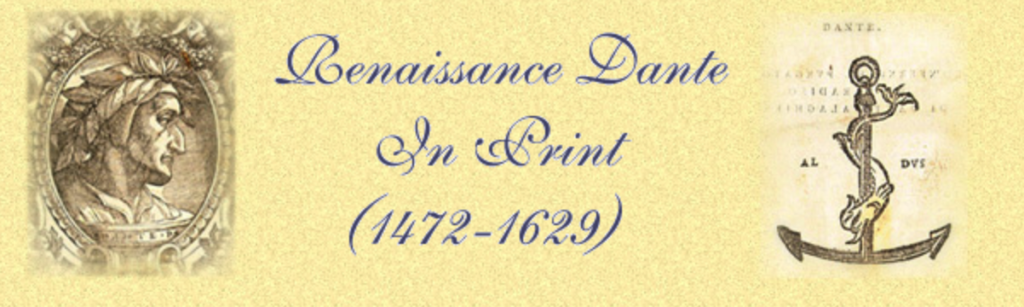
THIS EXHIBITION presents Renaissance editions of Dante’sDivine Comedy from the John A. Zahm, C.S.C., Dante Collection at the University of Notre Dame, together with selected treasures from The Newberry Library. The Zahm collection ranks among the top Dante collections in North America. Purchased for the most part by Zahm in 1902 from the Italian Dantophile Giulio Acquaticci, the 15th- and 16th- century imprints presented here form the heart of Zahm’s collection, which totals nearly 3,000 volumes, including rare editions and critical studies from the Renaissance to the present. The nine incunable editions and nearly complete series of 16th-century imprints featured in this exhibit constitute essential primary sources for both the history of Dante’s reception during the Renaissance and the early history of the printed book.
The concentrated Dante collection at Notre Dame is nicely complemented by the wide-ranging holdings of The Newberry Library in Renaissance literature and history, and especially for the history of printing and publishing. These two rich and varied collections have often been used by Dantists in the Midwest and from abroad. The complementarity of the collections is mirrored in the formal cooperation of Notre Dame and The Newberry Library through the consortium of The Newberry Library Center for Renaissance Studies, of which Notre Dame has been an active member since 1983. The exhibit was originally held at the Department of Special Collections, University Libraries, University of Notre Dame, October 15 – December 15, 1993 and the Newberry Library between 15 April – 15 June, 1994, and has been produced in expanded form for Internet publication by a collaboration between the William and Katherine Devers Program in Dante Studies, University of Notre Dame and the ARTFL Project of the University of Chicago. The Devers Program, the ARTFL Project, and the Newberry Library are proud to welcome you to Renaissance Dante in Print (1472-1629).
The international database of 15th-century European printing created by the British Library with contributions from institutions worldwide. The database records nearly every item printed from movable type before 1501, but not material printed entirely from woodblocks or engraved plates.
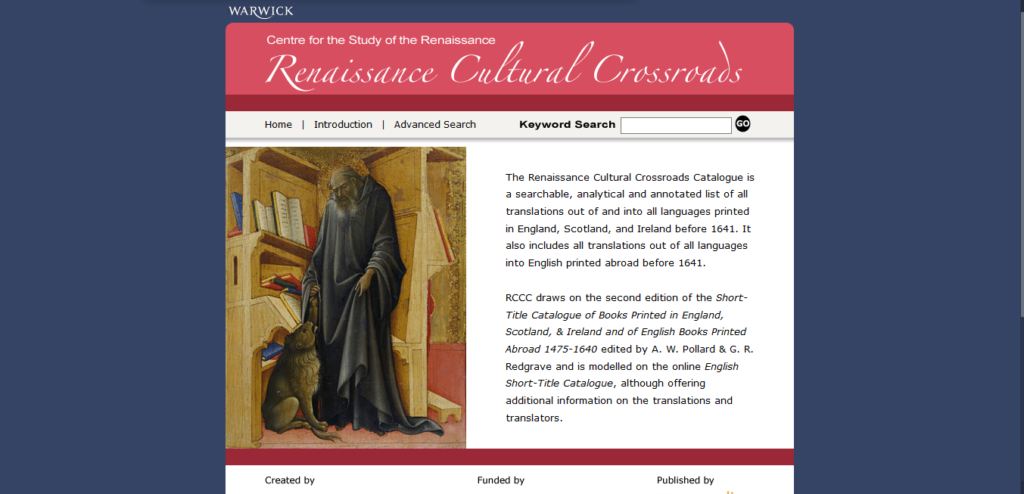
The Renaissance Cultural Crossroads Catalogue is a searchable, analytical and annotated list of all translations out of and into all languages printed in England, Scotland, and Ireland before 1641.
Mesolore is a bilingual resource for scholars and students of Mesoamerica. It includes interactive indigenous documents from Central Mexico and Oaxaca such as the Codex Nuttall (c.1500).
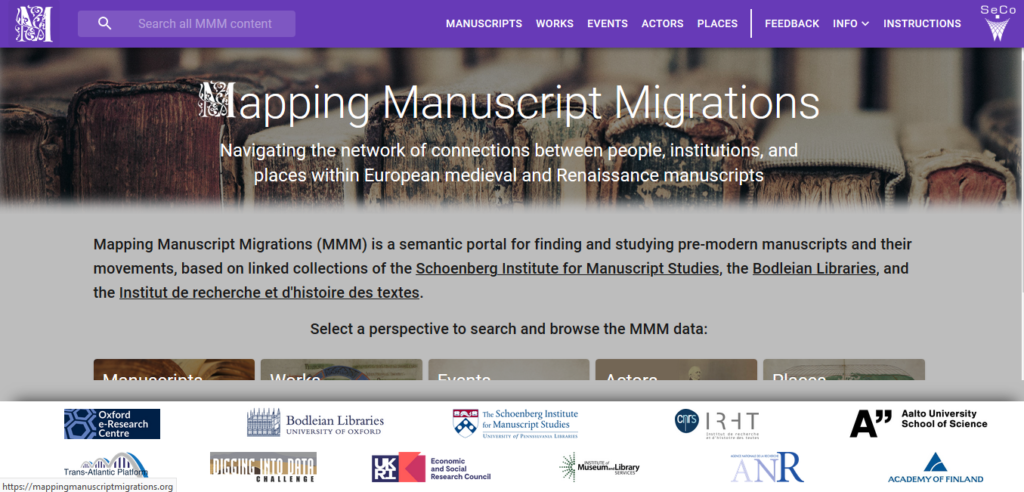
Mapping Manuscript Migrations (MMM) allows users to find and study medieval and Renaissance manuscripts and their movements and navigate the network of connections between people, institutions, and places associated with these manuscripts.
An online source on the library of the 17th-century experimental philosopher and architect, Robert Hooke (1635–1703). The site is comprised of an extensive editors’ introduction and a searchable database of 2,711 records.