A portal for art history resources include art history departments, museums, online collections, and research.
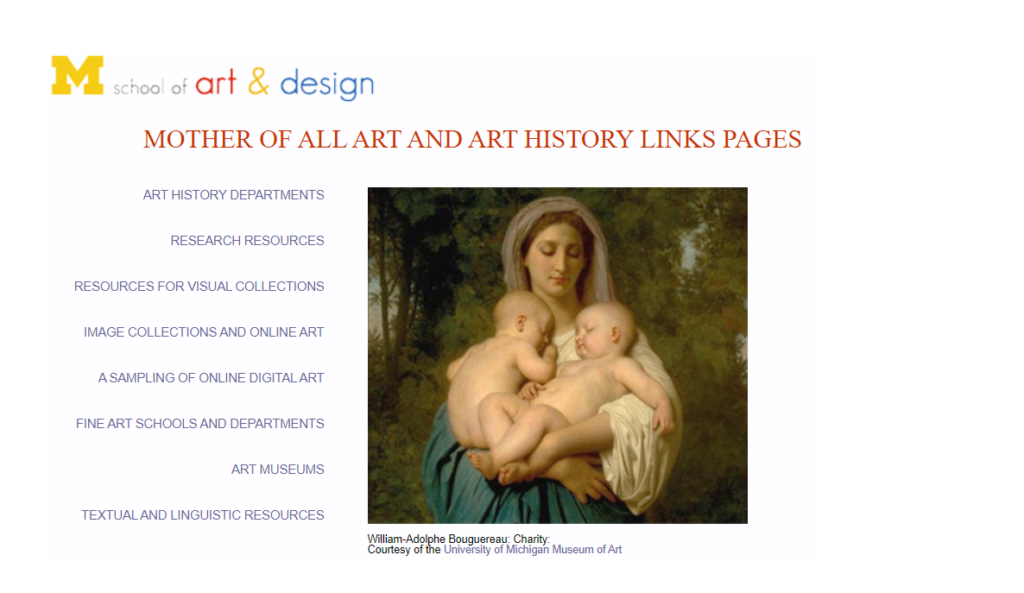
A portal for art history resources include art history departments, museums, online collections, and research.
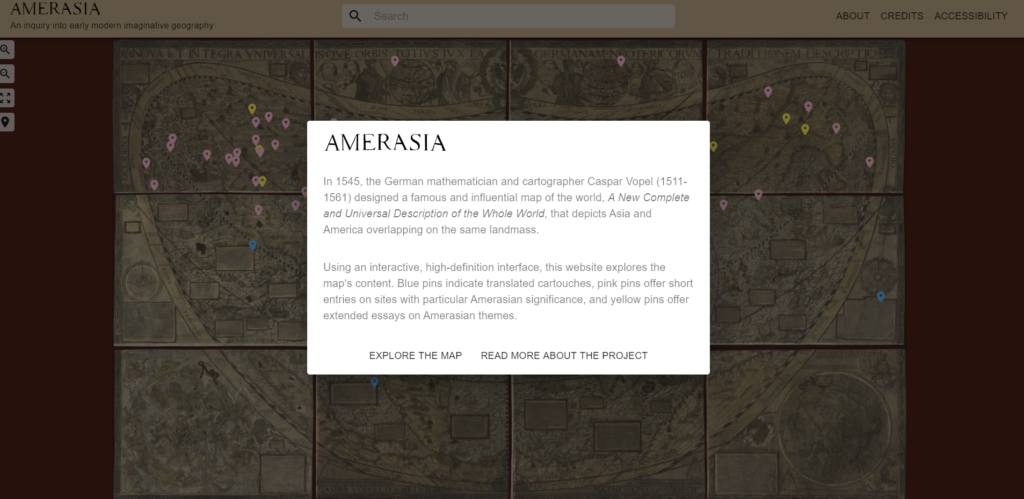
In 1545, the German mathematician and cartographer Caspar Vopel (1511-1561) designed a famous and influential map of the world, A New Complete and Universal Description of the Whole World, that depicts Asia and America overlapping on the same landmass. Using an interactive, high-definition interface, Amerasia explores the map’s content. Blue pins indicate translated cartouches, pink pins offer short entries on sites with particular Amerasian significance, and yellow pins offer extended essays on Amerasian themes.
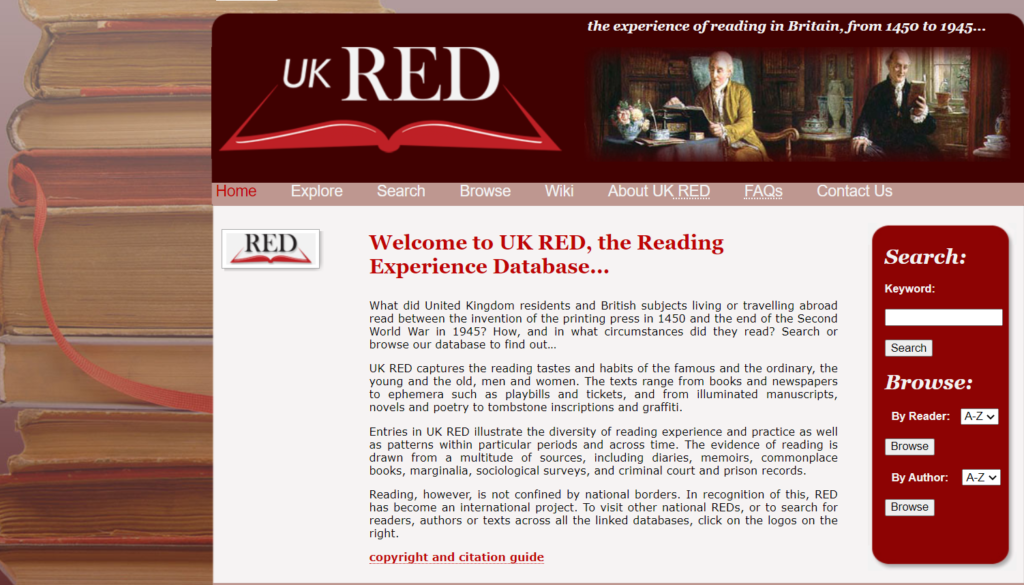
UK RED is an open-access database housed at The Open University containing over 30,000 easily searchable records documenting the history of reading in Britain from 1450 to 1945. Evidence of reading presented in UK RED is drawn from published and unpublished sources as diverse as diaries, commonplace books, memoirs, sociological surveys, and criminal court and prison records.

This site gathers artistic representations of death, dead bodies, relics, anatomical specimens and burial instructions to analyze how death altered the category of gender in the early modern period. These are testimonies of real and symbolic interventions counteracting or re-signifying the loss of sexual markers and gendered behaviours in remains that had been part of gendered human beings.With their interventions, producers and consumers of human remains (embalmers, artists, the faithful, anatomists) reinstated, effaced, or transcended the remains’ previous gender identity and the category of gender itself.
This site is useful for the study of gender in the early modern period, as well as for those studying funerary rituals, the treatment of human remains and other aspects related to death in the period as well as for art historians interested in the representation of death. Collaborations welcome.
http://www.johnfoxe.org/
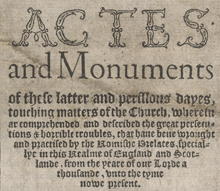
Includes the unabridged texts of the four editions of this massive work published in John Foxe’s lifetime (1563, 1570, 1576, 1583). Search and view modern transcriptions that keep as close as possible to the original texts, identify the individuals and places that are mentioned in the text, and explore the latest scholarship to understand the sources upon which it was based, and the purposes for which they were deployed. Facsimiles of all the woodcut illustrations in the text can be viewed along with commentaries. Significant passages in Latin and Greek are translated.
https://docs.google.com/document/d/1AaMp1al8y715FklUq1x5scqBHYS9QpzvMzgYU_ZyFow/edit
The richest bibliography for work in the field. This bibliography was initially compiled by Hannah Ehrenberg (BC ‘13), a former English/Theater major at Barnard College, with input from Kim F. Hall (Barnard College) and Peter Erickson (Northwestern University) for the 2015 Shakespeare Association of America seminar “Early Modern Race / Ethnic / Diaspora Studies.” There was a great wave of scholarship in early modern race studies during the 90s; this bibliography assumes some familiarity with that work and focuses roughly on scholarship since 2000.
http://www.divinedotcomedy.org/
Website to accompany an edition of the Purgatorio, including videos analyzing in art-historical detail all of the most important illustrations and illuminations to Purgatorio from the fourteenth century to the nineteenth centuries.
https://www.aaihs.org/about-black-perspectives/
Black Perspectives is the award-winning blog of the African American Intellectual History Society (AAIHS). As engaged scholars, we are deeply committed to producing and disseminating cutting-edge research that is accessible to the public and is oriented towards advancing the lives of people of African descent and humanity. We serve as a medium to advance these critical goals.
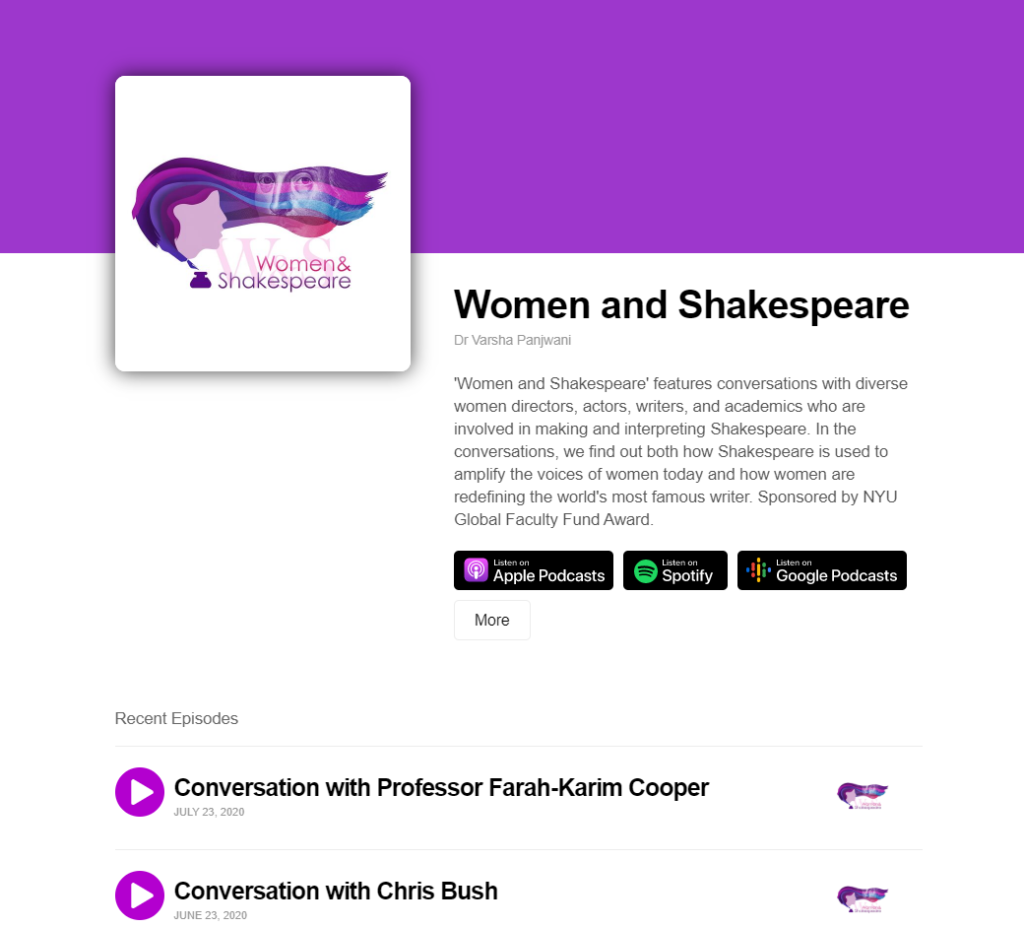
Women & Shakespeare Podcast is a monthly series that features conversations with diverse women directors, actors, writers, and academics who are involved in making and interpreting Shakespeare. It is designed to harness digital humanities to redress the gender and racial disparity in academic citational practices, public discourse, and rehearsal room power dynamics in the field of Shakespeare studies and performance. Funded by NYU (New York University), Series 1 includes guests ranging from renowned actors Dona Croll, Kathy Pogson, and Janet Suzman to Orwell prize-winning author, Dr Delia Jarett Macauley to Head of Higher Education and Research at Shakespeare’s Globe and Vice-President of the Shakespeare Association of America, Professor Farah Karim-Cooper, to multiple award-winning playwright Chris Bush.
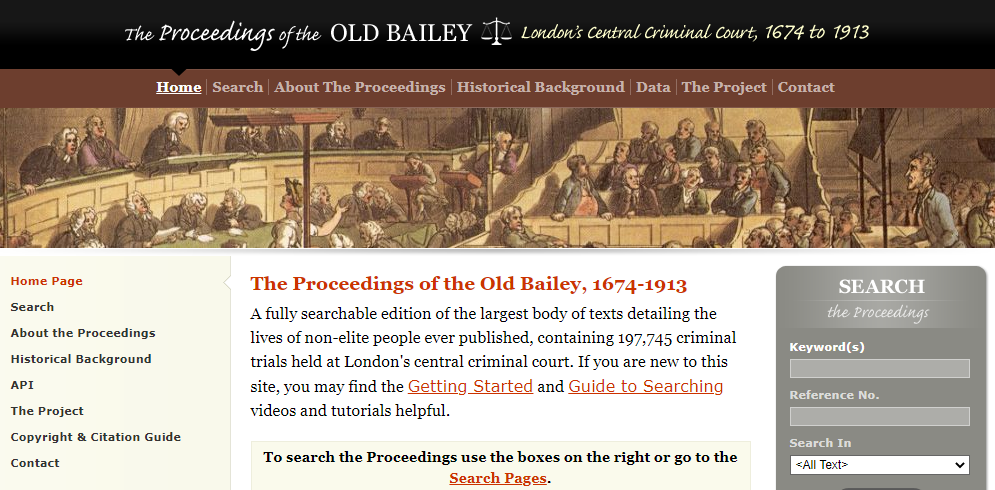
A fully searchable edition of the largest body of texts detailing the lives of non-elite people ever published, containing 197,745 criminal trials held at London’s central criminal court.