All Resources

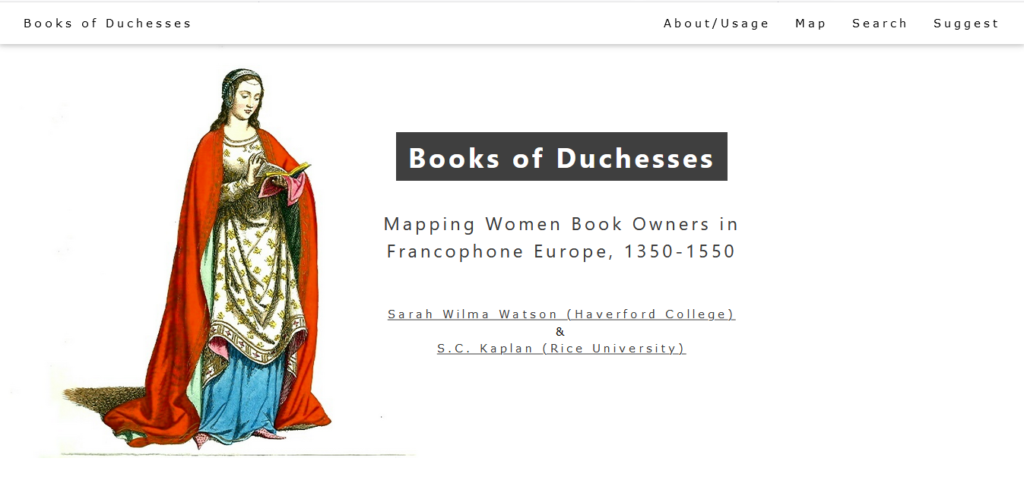
Books of Duchesses: Mapping Women Book Owners in Francophone Europe, 1350-1550

Books of Duchesses – Mapping Women Book Owners in Francophone Europe, 1350-1550

This project collects, organizes, and presents data related to late-medieval and early modern laywomen and their books. Through an interactive map of Europe, users are able to visualize networks of manuscripts, texts, and readers and explore the libraries and peregrinations of women book owners.

The data collected in the project has the potential to shift scholarly paradigms by challenging narratives of national literary history and uncovering the active role played by women in creating, consuming literary and material culture and in circulating texts across national, geographic, and generational borders.

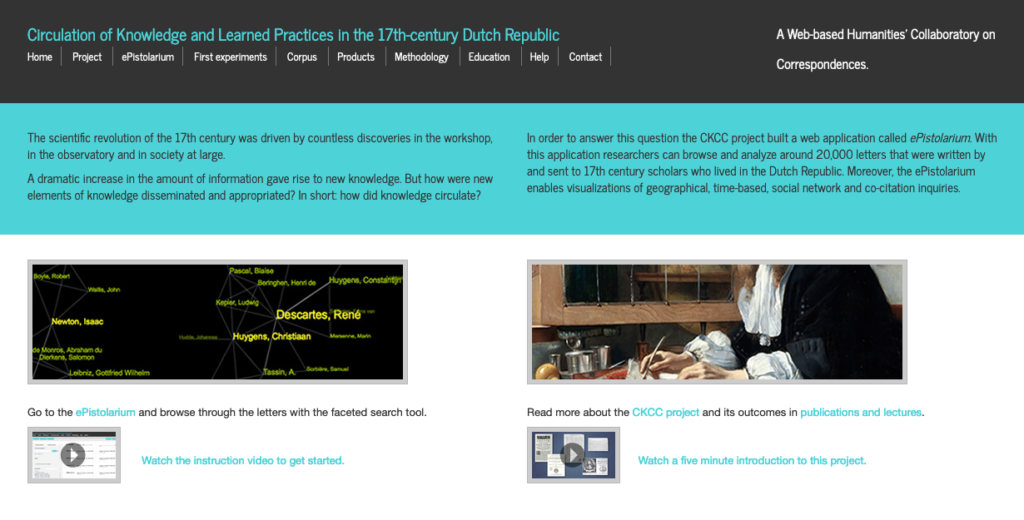
Circulation of Knowledge and Learned Practices in the 17thc-Dutch Republic

Circulation of Knowledge and Learned Practices in the 17thc-Dutch Republic

The project aims to explore and visualize how knowledge circulated during the booming scientific revolution of the 17th-century. The CKCC project built a web application called ePistolarium. With this application researchers can browse and analyze around 20,000 letters that were written by and sent to 17th century scholars who lived in the Dutch Republic. Moreover, the ePistolarium enables visualizations of geographical, time-based, social network and co-citation inquiries.

Cives Veneciarum

Cives Veneciarum

This is a database of some 3,600 citizenship privileges conferred on some 4,000 immigrants to Venice, from the twelfth century (one case) to the year 1500. The search program is easy to use; an introduction to the database is Reinhold C. Mueller’s Immigrazione e cittadinanza nella Venezia medievale, Deputazione di Storia Patria per le Venezie 1, Rome: Viella, 2010.

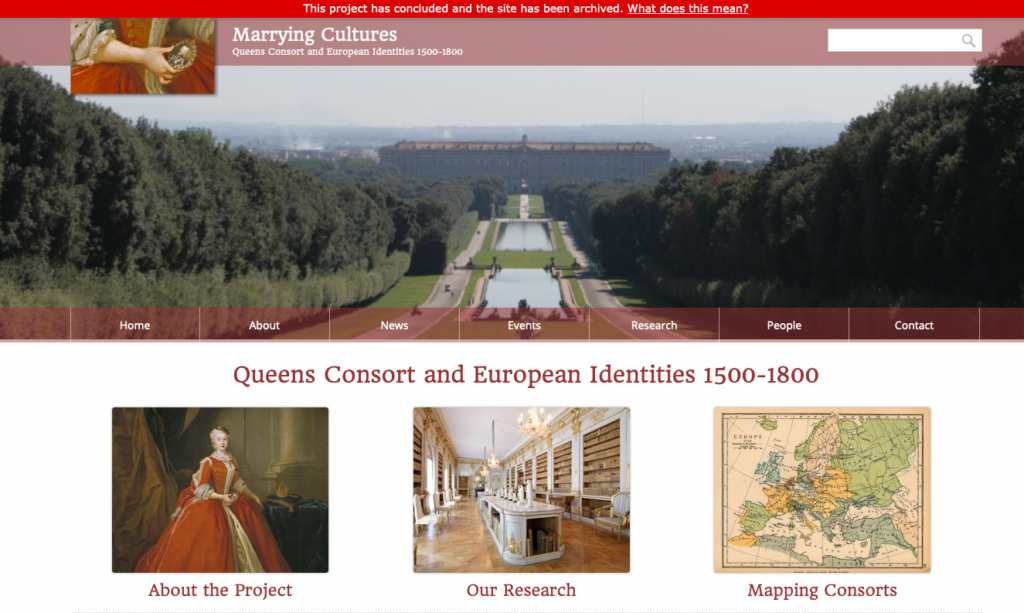
Marrying Cultures

Marrying Cultures

This HERA-funded project investigated the role of foreign consorts as agents, instruments or catalysts of cultural and dynastic transfer in early modern Europe (1500-1800). The consorts studied were chosen because they revealed cultural synergies between northern (Denmark, Sweden, Finland, Germany, Britain), eastern (Poland-Lithuania), and southern (Italy, Spain, Portugal) Europe and that enabled them to interrogate modern notions of centre and periphery, nationhood and dynastic.

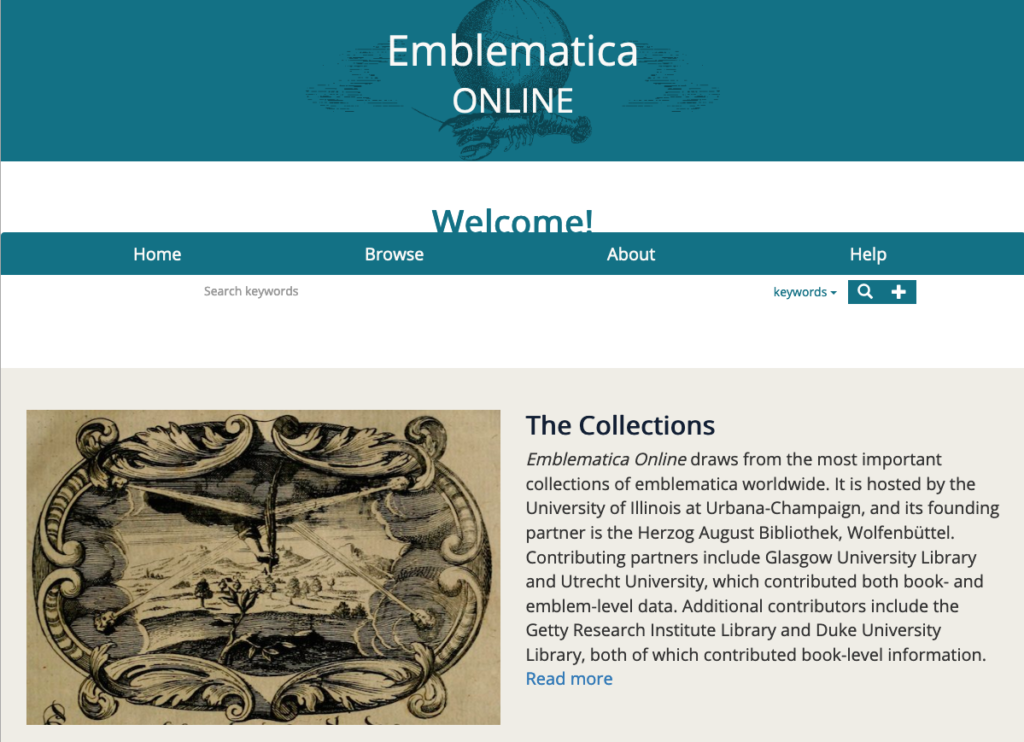
Emblematica Online

Emblematica Online

Emblematica Online draws from the most important collections of emblematica worldwide. It is hosted by the University of Illinois at Urbana-Champaign, and its founding partner is the Herzog August Bibliothek, Wolfenbüttel. Contributing partners include Glasgow University Library and Utrecht University, which contributed both book- and emblem-level data. Additional contributors include the Getty Research Institute Library, Newberry Libaray, and Duke University Library, both of which contributed book-level information. Scholars can freely access 1,406 full digital facsimiles of these rare books as well as search for individual emblems across collections.

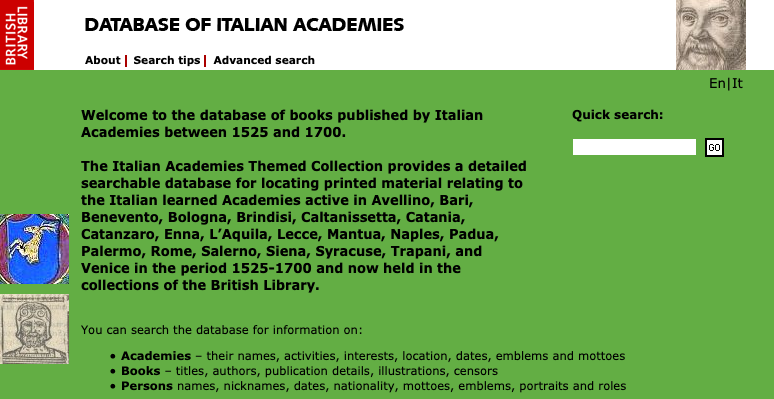
Database of Italian Academies

Database of Italian Academies

Provides a detailed searchable database for locating printed material relating to the Italian learned Academies active in Avellino, Bari, Benevento, Bologna, Brindisi, Caltanissetta, Catania, Catanzaro, Enna, L’Aquila, Lecce, Mantua, Naples, Padua, Palermo, Rome, Salerno, Siena, Syracuse, Trapani, and Venice in the period 1525-1700 and now held in the collections of the British Library.

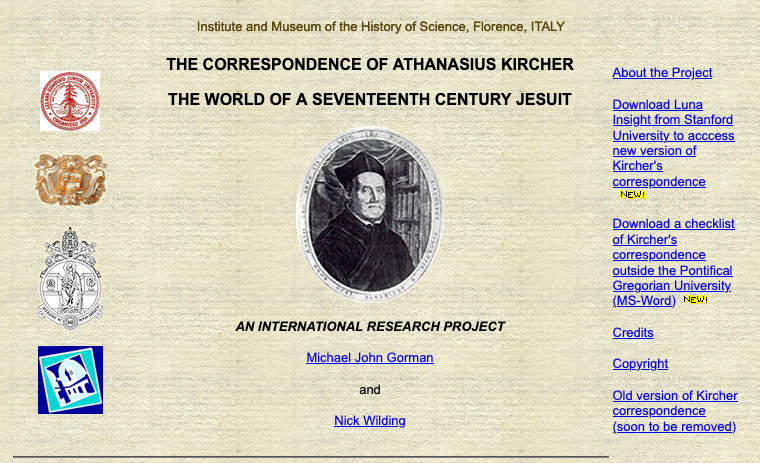
Correspondence of Athanasius Kircher

Correspondence of Athanasius Kircher

The Athanasius Kircher correspondence project provides access to the manuscript correspondence of Kircher, a seventeenth-century Jesuit. The project is a collaboration between the Istituto e Museo di Storia della Scienza in Florence, the Pontifical Gregorian University in Rome, and the European University Institute in Fiesole, under the direction of Michael John Gorman and Nick Wilding; it is now housed at Stanford University.

The Archeology of Reading

The Archeology of Reading

The Archaeology of Reading in Early Modern Europe (AOR) uses digital technologies to enable the systematic exploration of the historical reading practices of Renaissance scholars nearly 450 years ago. This is possible through AOR’s corpus of thirty-six fully digitized and searchable versions of early printed books filled with tens of thousands of handwritten notes, left by two of the most dedicated readers of the early modern period: John Dee and Gabriel Harvey.